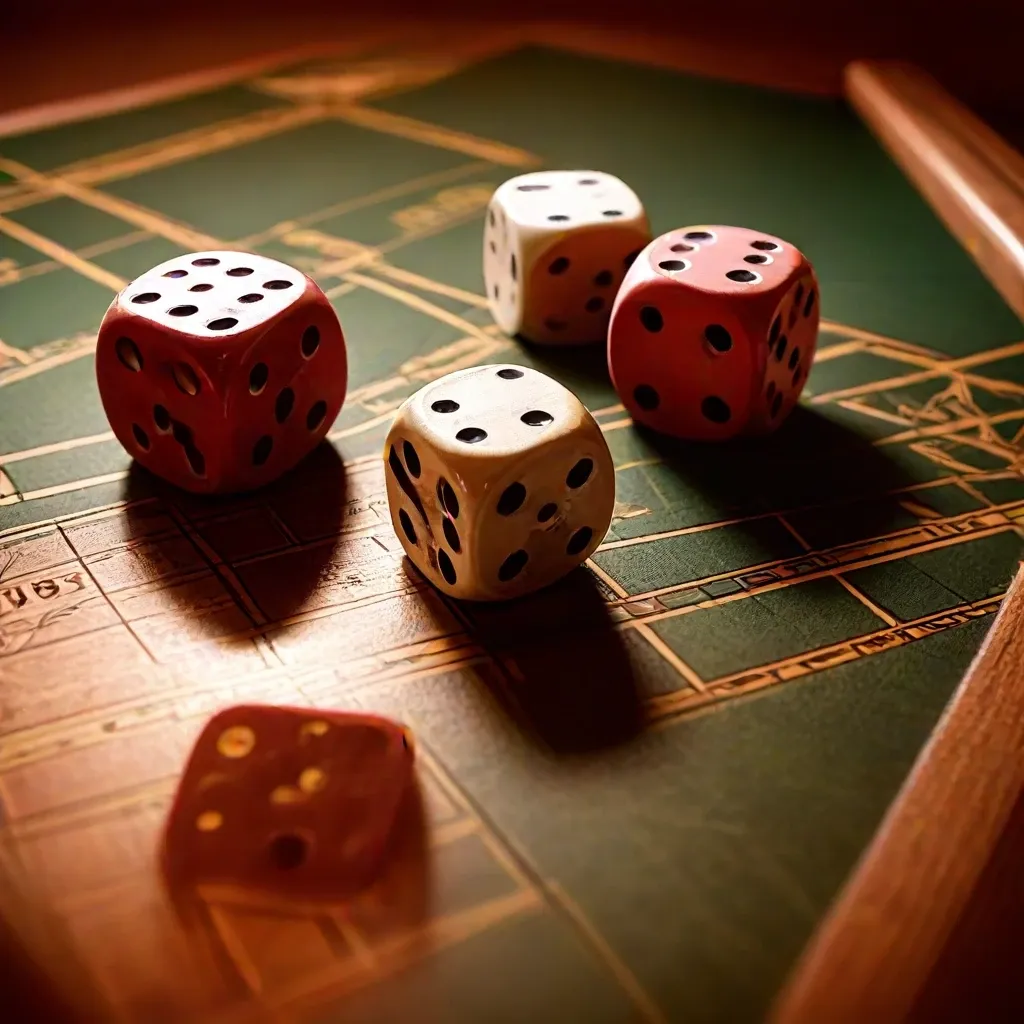
I once watched a seasoned Sic Bo player blow on the dice cup, muttering incantations before each roll. He truly believed the shaker held the key to his fortune. This perfectly encapsulates the world of Sic Bo, a captivating dice game steeped in tradition and riddled with superstitions. From lucky numbers to elaborate rituals surrounding the shaker, the game is often approached with more faith than strategy.
Sic Bo, with its dazzling array of betting options and seemingly random outcomes, can feel like a game of pure chance. However, peeling back the layers of mystique reveals a game governed by probability. This exploration of Sic Bo aims to cut through the noise of superstition and provide a data-driven understanding of the game. Forget relying on lucky charms; the focus is on proven strategies, understanding the odds, and ultimately, increasing the chances of winning. Let’s delve into the world of Sic Bo and transform chance into a calculated advantage.
The Anatomy of Sic Bo
Understanding the Dice and the Table
Sic Bo, at its heart, is a game of chance involving three dice. These aren’t special dice; they are standard six-sided dice, each face marked with numbers one through six. The game revolves around predicting the outcome of the roll of these three dice. The table layout is where all game happens, and it might seem intimidating at first glance, but it’s actually quite logical once dissected.
The Sic Bo table features various betting areas, each corresponding to a specific dice combination or outcome. These areas are clearly marked with the corresponding payouts. While the fundamental layout remains consistent, slight variations might exist depending on the casino or the online platform. Some tables might offer additional or slightly modified betting options, but the core principle remains the same: predict the outcome of the three dice.
Betting options in Sic Bo are extensive, catering to different risk appetites and strategies. Common bets include Small/Big (total of the three dice being within a certain range), Odd/Even (total being odd or even), specific numbers appearing on a single die, doubles (two dice showing the same number), and triples (all three dice showing the same number). Each betting option carries a different payout, reflecting its probability. For instance, betting on a specific triple has a lower probability and thus a higher payout than betting on Big or Small. Understanding these betting options and their corresponding payouts is crucial for informed gameplay.
While traditional Sic Bo uses three dice, some variations exist. These might involve different numbers of dice or modified betting options, but these are less common. The core principles of predicting dice outcomes and understanding the table layout remain central to all variations of the game. So, while you might encounter slightly different versions, mastering the basics of Sic Bo will equip you to navigate most variations with ease.

Shakers: Myth vs. Reality
One of the most persistent myths surrounding Sic Bo is the belief that the shaker, or dealer, holds significant power over the dice and the game’s outcome. The idea that a dealer can consistently influence the dice to land on specific numbers is a tempting one, especially for players looking for an edge. However, a closer look at the physics of dice, the nature of randomness, and even a bit of common sense reveals that this belief is largely unfounded. While the mystique surrounding the shaker might add to the game’s allure, the reality is far more grounded in probability than in supernatural skill.
Casinos are very concerned about reputation. It’s the most important thing to them. Allowing dealers to control dice outcomes would be a disaster. If a casino ever got caught doing that, it would be the end of the road, and nobody would ever trust them again. That’s why casinos make sure the games are fair, and that includes making sure the dice rolls are random and fair.
Having observed countless Sic Bo games, it becomes clear that dealers, while skilled in their role, operate within the bounds of probability. The very nature of a casino relies on the inherent odds of the games and the statistical advantage they hold. Granting a dealer the ability to manipulate those odds would be a risk no casino would reasonably take. And while some may claim to have witnessed dealers exerting control, these observations are more likely attributed to selective memory, where wins are remembered, and losses are attributed to external factors.
The Science of Random Dice Rolls
Imagine a leaf falling from a tree. It twirls, it dances, it’s almost impossible to guess exactly where it will land. That’s because even small changes in the wind or the way it’s spinning can completely change its path. Dice are similar. Each tiny imperfection, each slight variation in the way they’re shaken, contributes to a cascade of unpredictable events. This is randomness in action. It’s like nature flipping a coin, except with six sides, and a whole load of physics involved which makes dice throw unpredictable.
Unmasking Sic Bo Superstitions
How Superstitions Cloud Judgement
Sic Bo, a game of chance with its rattling dice and endless betting options, seems to naturally breed superstition. I’ve watched players meticulously blow on the dice before a roll, convinced it would influence the outcome. Others religiously avoided betting on the number four, linking it to bad luck or even death in some cultures. Then there’s the classic: the belief in ‘hot’ streaks, where players double down, convinced that past results somehow dictate future ones.
These Sic Bo superstitions, while seemingly harmless, can seriously cloud judgement. Take the gambler’s fallacy, for example. It’s the idea that if a particular outcome hasn’t occurred in a while, it’s “due” to happen. I saw a guy once betting everything he had because doubles hadn’t show up for the last ten rolls. He was sure it was coming. Of course, it didn’t happen, and he lost it all. The dice have no memory; each roll is an independent event.
Confirmation bias also plays a big role. Players remember the times their superstition ‘worked,’ reinforcing the belief, while conveniently forgetting the instances when it didn’t. Or the availability heuristic, where recent or vivid events (like seeing someone win big betting on a particular number) warp the perceived probability. I remember a time when every player in the casino placed their bet on the number that just won. Of course, the odds of that same number winning again are very unlikely.
Rational betting in Sic Bo demands understanding the odds and probabilities. Superstitions introduce illogical elements, prompting impulsive bets and potentially bigger losses. Recognizing these cognitive biases is the first step in making informed decisions and enjoying the game responsibly, even if it means resisting the urge to blow on the dice.
Probability: Your Only Ally in Sic Bo
In the thrilling world of Sic Bo, where dice determine destiny, understanding probability isn’t just helpful – it’s your lifeline. Sic Bo, at its core, is a game of chance, but armed with the knowledge of probability, you can transform from a passive gambler into a strategic player. The game unfolds with three dice rolled, and you’re faced with a multitude of betting options, each carrying its own unique set of odds. Familiarizing yourself with these odds is the first step toward informed decision-making.
Think about it: betting on a specific triple (like three 6s) offers a massive payout, but the probability of that occurring is significantly lower compared to betting on a simple Big or Small outcome. By grasping the odds associated with each bet type, you begin to see Sic Bo not as a random free-for-all, but as a landscape of calculated risks. This understanding allows you to consciously choose which risks are worth taking and which should be avoided. It’s about tilting the odds ever so slightly in your favor, turning a game of pure luck into one where strategy plays a crucial role.
Mathematical strategy becomes your compass in this dice-laden world. Calculating the expected value (EV) – a measure of how much you can expect to win or lose on a bet in the long run – lets you compare the relative merits of different betting options. For instance, a bet with a higher probability of winning but a lower payout might be more advantageous than a bet with a low probability but a massive potential return. By understanding probability and expected value, you can navigate the complexities of Sic Bo and make the smartest bets possible.
Consider this: A common beginner mistake is chasing after those high-payout combination bets without considering the incredibly low odds. A more probability-focused approach might involve focusing on bets with lower payouts but significantly higher odds of success, effectively preserving your bankroll and extending your playtime. Though even the most skilled player can’t predict the outcome of each roll, a solid grasp of probability provides the foundation for making choices that, over time, will increase chances of success. It’s about playing smarter, not harder, and letting the power of probability guide your Sic Bo journey.
Understanding the House Edge
The house edge represents the casino’s advantage, built into every game. It essentially dictates the percentage of each bet the casino expects to retain in the long run. Different Sic Bo bets come with different house edges. For example, Some combination bets, although tempting, have significantly larger house edges than simple Big/Small bets.

Building a Bankroll Strategy
Navigating the world of Sic Bo, or any casino game for that matter, requires more than just understanding the rules. It demands a strategic approach to managing your bankroll – the funds you’ve allocated for gambling. Think of it as the fuel in your race car; without proper management, you’ll quickly run out of gas and be left watching from the sidelines. Effective bankroll management isn’t about guaranteeing wins; it’s about extending your playtime, weathering the inevitable losing streaks, and maximizing your chances of long-term success while minimizing the risk of financial distress.
One of the cornerstones of bankroll management is setting clear, defined limits. Before even placing your first bet, decide on a daily, weekly, or monthly spending limit, and stick to it religiously. Treat this limit as a non-negotiable boundary. Consider using a separate account specifically for gambling funds. This creates a psychological and practical barrier, preventing you from dipping into essential funds. Once your allocated funds are gone, walk away. No excuses, no “just one more bet.”
The allure of recovering losses can be incredibly strong, but chasing losses is a surefire path to disaster. It leads to impulsive bets, clouded judgment, and ultimately, a depleted bankroll. Instead of trying to recoup losses immediately, accept them as part of the game. Re-evaluate your strategy, take a break, and return another day with a clear head and a fresh perspective. Remember, even small, consistent bets, when managed carefully, can lead to significant gains over time. Conversely, large, reckless bets, even when they occasionally pay off, can wipe out your bankroll in an instant.
I once saw a player at a Sic Bo table who seemed to be on a hot streak. He was betting big and winning big, attracting a crowd of onlookers. However, as the night wore on, his luck turned, and he began chasing his losses with increasingly larger bets. In a matter of hours, he lost everything he had won, plus a significant chunk of his initial bankroll. It was a stark reminder of the importance of discipline and sticking to your pre-defined limits, regardless of whether you’re winning or losing.
Knowing When to Stop
Responsible gambling hinges on self-awareness and self-control. Recognizing the signs of problem gambling is crucial. Are you gambling more than you can afford to lose? Are you borrowing money to gamble? Are you neglecting your responsibilities? If you answer yes to any of these questions, it’s time to seek help. Setting limits is not enough; you have to consciously know when to stop.
Conclusion
Sic Bo, at its heart, is a game of chance. While certain players might cling to lucky shakers or base bets on superstitions, remember that these have minimal impact on the outcomes. The real Sic Bo strategy lies in understanding probability and diligently managing your bankroll. These are the tools that can help to navigate the game with more control and potentially extend your gameplay. While variations of Sic Bo exist, the principles of probability and responsible bankroll management remain universally relevant.
Approach Sic Bo, and any casino game, with a rational and informed mindset. Avoid chasing losses and set realistic expectations. By employing the strategies outlined here and practicing responsible gaming habits, one can enhance the enjoyment of the game. For more expert advice and insights into the world of casino games, explore our website for in-depth guides and resources.