
Forget Hollywood’s depiction of blackjack. Card counting isn’t about having a superhuman memory or defying the laws of probability. It’s a skill, honed through dedicated study and practice, and when wielded correctly, it can shift the odds slightly in your favor. Now, enter the blackjack card counting calculator. It sounds like a cheat code ripped straight from a video game, promising instant riches and guaranteed wins. The truth, as always, is far more nuanced.
These calculators aren’t magic bullets; they are strategic tools, digital assistants that can augment your existing knowledge and refine your gameplay. Think of them as a blacksmith’s hammer – powerful in the hands of a skilled artisan, but useless to someone who doesn’t know how to shape metal. I am here to navigate the complexities surrounding these tools, separating fact from fiction and showing you how, when used ethically and legally, a card counting calculator can be a valuable asset in your pursuit of advantage play.
Blackjack Basic and Card Counting Fundamentals
Understanding blackjack starts with grasping the fundamental rules. In a standard game, players aim to beat the dealer by accumulating a hand value as close to 21 as possible without exceeding it. The game involves key decisions like hitting (taking another card), standing (ending your turn), splitting (separating a pair into two hands), and doubling down (doubling your bet and taking one more card). Mastering these basic blackjack rules is the first step towards becoming a proficient player.
Blackjack Basic and rules
Everyone remembers their first blackjack bets! The thrill of the game comes from its simplicity. Basic blackjack rules dictate that players receive two cards initially, and then strategically choose to “hit” or “stand” based on their hand and the dealer’s visible card. Understanding these basic blackjack rules is paramount to making informed decisions and minimizing the house edge.
Explaining card couting fundamentals
Card counting, at its core, isn’t about memorizing every card dealt. Instead, it’s a strategic method to track the ratio of high cards (10s, face cards, Aces) to low cards (2-6) remaining in the deck. A popular, relatively simple system is the Hi-Lo, where you assign a value of +1 to low cards and -1 to high cards. Adding up the count as cards are dealt provides what’s known as the running count. The running count helps estimate the composition of the remaining cards, informing betting and playing decisions. Consider this section as a set of tools to understand future use of card counting calculators.
How Blackjack Card Counting Calculators Work
Mobile apps vs online calculators
Card counting calculators come in a few flavors these days. You’ve got your classic online calculators, accessible through a web browser, which are great for in-depth analysis from the comfort of your computer. Then there are card counting apps for your mobile device. The real advantage of a mobile app is the accessibility, you can take it anywhere you go, analyze games on the fly, discreetly plug in numbers, and get instant feedback. I prefer using a phone because they can be with you all the time.

Benefits and Limitations of Using Calculators
Card counting calculators offer a compelling proposition: enhanced speed and accuracy at the blackjack table. The primary advantage lies in their ability to process information far quicker than the human mind, leading to faster betting decisions and minimizing errors associated with manual calculations. These tools often come equipped with customizable settings, allowing players to adapt to different rule variations encountered across various casinos. This adaptability can be a significant asset for those who frequent multiple establishments or play online.
However, relying solely on a card counting calculator has its disadvantages. One major limitation is the dependence on technology. A dead battery, a software glitch, or even a casino’s countermeasures against electronic devices can render the calculator useless. Furthermore, calculators struggle to adjust to rapid changes at the table, such as multiple players joining or leaving mid-shoe. The speed of play could be impacted. And perhaps most importantly, these devices are only effective if the user possesses a solid understanding of the underlying card counting principles.
I remember once being at a table where the count was fluctuating wildly. I was using a calculator app and, for a few hands, it really helped me keep track when the dealer was quickly shuffling in new cards. Then, the app froze mid-shoe. I felt totally lost and disoriented for a moment. It made me realize you can’t totally depend on having the technology work perfectly. You absolutely need to understand the basics yourself.
Ultimately, card counting calculators can be valuable tools, but they are not a substitute for knowledge, experience, and adaptability. They represent a double-edged sword; providing speed and precision while simultaneously fostering reliance and vulnerability.
Ethical and Legal Considerations
Understanding the line between strategy and cheating is crucial when employing techniques like card counting or using aids such as calculators in casinos. Card counting, in most jurisdictions, isn’t inherently illegal. Mastering probabilities and statistically adjusting bets isn’t against the law. However, casinos operate on the principle of risk and reward, and they reserve the right to refuse service to anyone they deem to be negatively impacting their odds. If a casino suspects a player of card counting, they might ask them to leave.
The use of calculators introduces a grayer area. While mentally calculating odds might be seen as skillful play, using electronic devices to gain an advantage can be viewed differently. Casinos employ sophisticated surveillance technology to detect any form of cheating. Secretly using a calculator, especially a hidden one, might be considered cheating and could lead to serious consequences, including legal penalties depending on local laws. It’s essential to be aware of both the casino’s rules and local regulations regarding the use of electronic devices while gambling. When in doubt, discretion and adherence to the establishment’s code of conduct are always the safest bet.
Choosing the Right Calculator
Selecting the right card counting calculator hinges on aligning its features with individual needs and preferences. Several factors come into play, starting with the desired level of rule customization. Some calculators offer rigid, pre-set rules, while others allow users to tweak parameters to mirror specific casino conditions or personal betting strategies. This flexibility is invaluable for advanced players.
User interface is another critical consideration. A clear, intuitive display is essential for quick decision-making at the table. Look for calculators that present information concisely, avoiding unnecessary clutter or complex graphics that could slow you down. Ease of use extends beyond the display; the input method should be straightforward and responsive.
Cost is always a factor, but accuracy should be the overriding concern. While free calculators exist, they may lack the rigorous testing and refinement of paid options. Skimping on accuracy can lead to costly errors. Before committing, research reviews and compare the features of several calculators, prioritizing consistent, reliable information above potential cost savings. Avoid options that appear to demand excessive processing power, as this could indicate inefficient algorithms and potential inaccuracies. The right card counting calculator is an investment in informed play, not just a number-crunching tool.
Integrating Calculators Into Your Strategy: Effective Gameplay
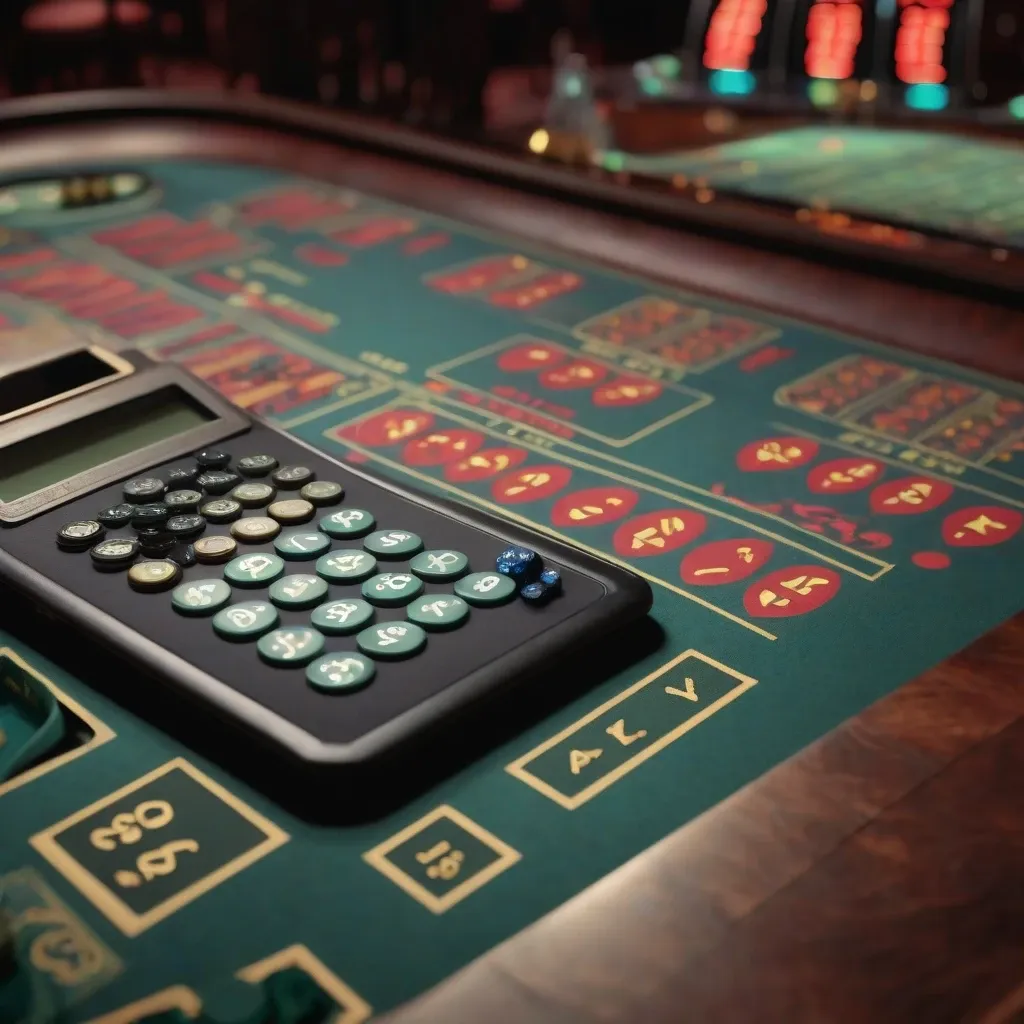
Blackjack calculators are powerful tools, but they’re most effective when integrated thoughtfully into a broader strategy. Think of them as a second opinion, a way to double-check instinct and refine your decision-making, not a replacement for fundamental blackjack knowledge.
Strategy Integration: Start by mastering basic blackjack strategy. There are plenty of resources and charts available; commit them to memory. A calculator then becomes a tool to confirm borderline decisions or explore “what-if” scenarios. For example, if you deviate from basic strategy in a specific situation, use the calculator to instantly determine the change in expected value.
Gameplay Dynamics: Calculators shine when assessing risk. Use them to evaluate insurance bets, especially when you suspect a high concentration of ten-value cards remaining. Also, consider your table position. Being later in the dealing sequence gives you more information, allowing the calculator to work with greater accuracy.
Risk Management and Bankroll: Bankroll management is crucial. Use calculators to model different betting scenarios and assess their impact on your bankroll. Understand the variance involved in blackjack. Don’t bet amounts that could cripple you during inevitable downswings.
Table Selection: The rules of the table significantly impact your odds. Before settling in, use a calculator to assess the house edge under the specific rules offered (e.g., number of decks, dealer hits/stands on soft 17, surrender options). Choosing the right table can demonstrably improve your long-term prospects.
Advanced Card Counting Techniques
Beyond basic card counting strategies lie advanced techniques that can significantly increase a player’s edge. These methods go far beyond simple mental calculations and require dedication, skill, and a deep understanding of the game. While not for the faint of heart, mastering these techniques can be a rewarding pursuit for serious players.
One such advanced technique is shuffle tracking. This involves carefully observing the dealer’s shuffling process to identify sections of the deck where favorable cards are likely to be concentrated. By tracking these “slugs” of cards, a player can adjust their bets and playing decisions when those cards are in play.
Another advanced approach involves team play, where multiple players collaborate to gain an advantage. For example, one player may count the cards at a table and signal to another player when the count is favorable. Wonging is another technique where players enter or leave a game based on the count, maximizing their play during favorable conditions. These strategies require coordination and communication, but when executed effectively, increase profitability.
These advanced techniques represent the highest level of card counting, offering a glimpse into the intricate world of advantage play. Aspiring players should recognize the commitment required to master these strategies.
Future of Card Counting Calculators
The landscape of card counting is continuously evolving, influenced by advancements in technology. Artificial intelligence (AI) and machine learning are beginning to play a role in creating more sophisticated card counting calculators. These advanced tools can analyze complex game scenarios beyond basic card counting, potentially incorporating factors like player behavior and dealer tendencies to provide more nuanced betting strategies.
Wearable technology represents another frontier. Imagine discreet devices that can track cards and provide subtle cues to players. While ethical and legal considerations are significant, the potential exists for integration. Online blackjack also impacts card counting as casinos adapt by using continuous shuffling machines and sophisticated algorithms to detect and deter card counters. As card counting calculators evolve, casinos will likely develop more advanced counter-measures, leading to an ongoing game of cat and mouse. The future will be about adaptation and innovation on both sides.
Conclusion
Blackjack card counting calculators are not magic bullets, but powerful, strategic tools when used responsibly. Success in blackjack requires more than just a calculator; it demands skill, knowledge of the game, and smart decision-making. Calculators can enhance a player’s abilities, providing real-time data and insights, but they don’t guarantee wins.
The future of blackjack may see even more advanced tools and techniques emerge. Embrace these resources as aids to improve strategy, but never rely on them entirely. Continuous learning and a dedication to improving one’s understanding of blackjack are essential for long-term success. So, hone those skills, understand the odds, and start practicing today!